Lighting Up the Shop Floor: Benefits of Industrial Skylights
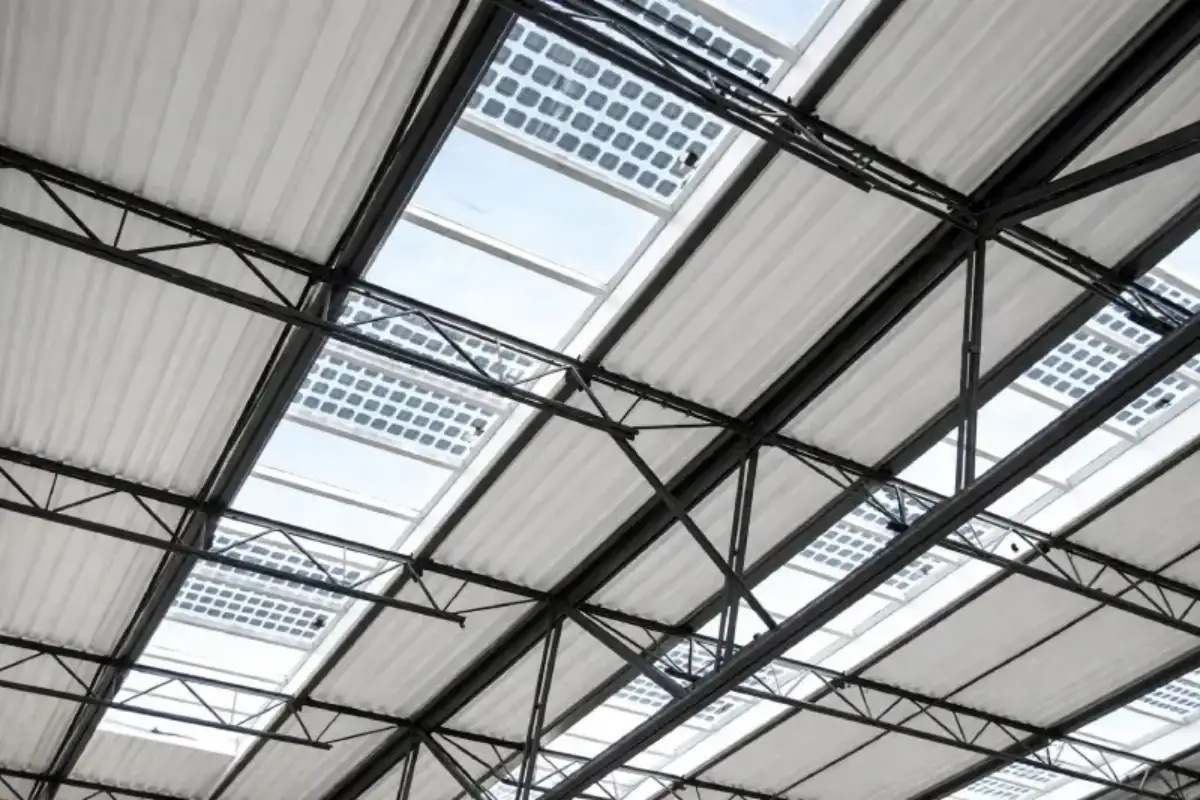
Manufacturing and distribution facilities built before the 1990s were typically designed around artificial lighting. Facility designers treated natural light as incidental, a byproduct of windows placed for ventilation rather than illumination. Industrial skylights changed that calculus: when specified correctly, they deliver consistent natural light across large floor plates. Also, they reduce dependence on electric lighting and contribute to measurable improvements in worker performance and safety.
Table of Contents
Why Natural Light Matters on the Shop Floor
Studies consistently link natural light in industrial settings to higher worker productivity and lower absenteeism. The WBDG’s daylighting resource documents this connection directly. For manufacturing and distribution environments, those outcomes translate directly to better operational performance. For example, workers in well-lit spaces move more safely and make fewer errors. They also sustain output levels across longer shifts. The Occupational Safety and Health Administration (OSHA) identifies inadequate lighting as a contributing factor in industrial accidents. Consequently, controlled daylighting is a safety consideration as much as a productivity one.
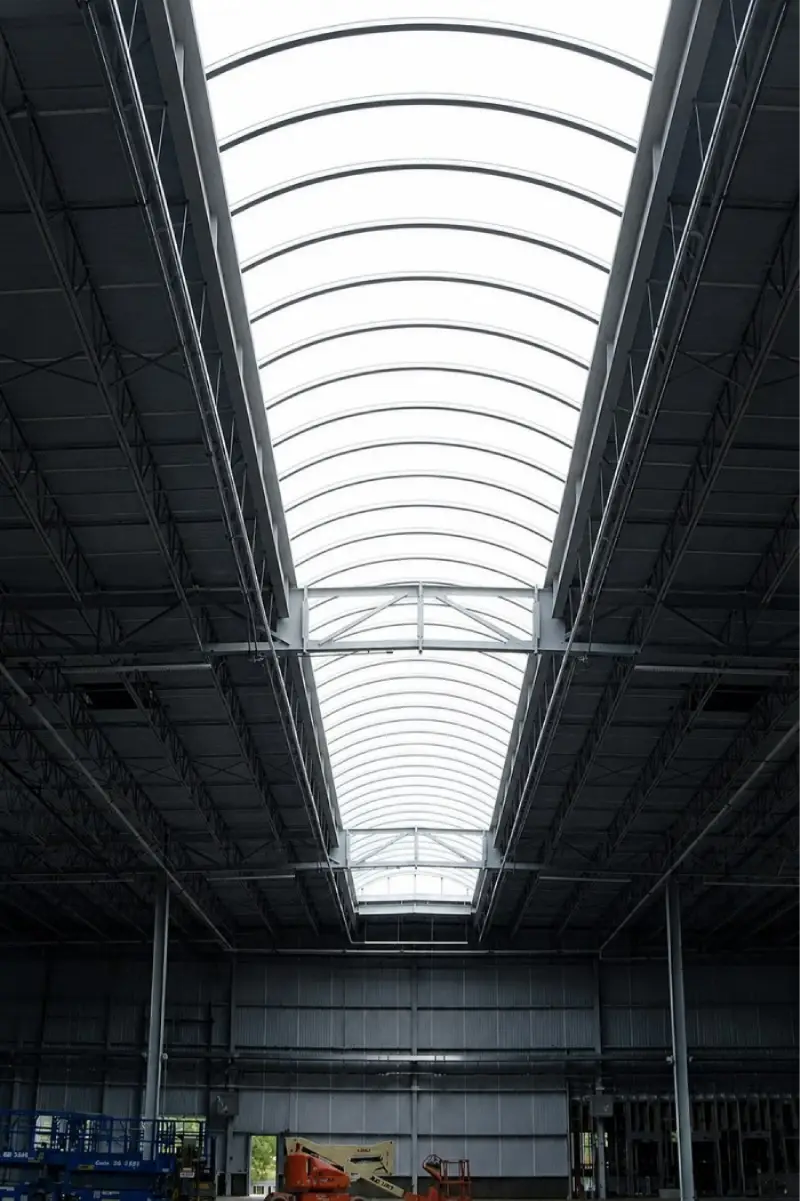
The mechanism is straightforward: natural light supports the body’s circadian rhythm in ways that artificial lighting cannot fully replicate. Facilities with consistent natural light exposure report fewer complaints of eye strain and fatigue. These two conditions contribute directly to errors and accidents on active production floors. Additionally, polycarbonate skylights diffuse light evenly rather than transmitting it in direct beams. That eliminates the hot spots and glare associated with direct exposure to daylight.
Industrial Skylights and Polycarbonate Performance
However, not all skylight glazing performs equally in industrial conditions. Glass skylights are heavy, prone to breakage, and transmit direct light that creates glare on work surfaces. In contrast, polycarbonate skylights are up to 250 times stronger and more impact-resistant than glass. They are also significantly lighter, which reduces the structural load on the roof and simplifies installation on existing structures.
Furthermore, polycarbonate panels receive a UV-reflecting coextrusion on both sides during production. That prevents yellowing over time and maintains consistent light transmission across the service life of the system. Multiwall polycarbonate also provides up to four times the insulating value of single-pane glass. Consequently, that insulating value reduces HVAC demand in areas served by skylights. Also, each polycarbonate panel is individually replaceable if a section sustains damage. That reduces the long-term maintenance cost of the system. Polycarbonate daylighting systems have helped manufacturing and distribution facilities reduce both lighting costs and energy demand.
EXTECH Systems for Industrial Buildings
EXTECH offers skylight configurations suited to industrial conditions. Specifically, the SKYGARD 3300 is a surface-mounted system that attaches to existing roof framing. That makes it a practical choice for retrofit projects where structural modifications are not feasible. Meanwhile, the SKYGARD 3700 is self-spanning and bridges large openings without intermediate support. For wide-bay manufacturing spaces, that capability eliminates the need for additional structural framing across the daylighting zone.
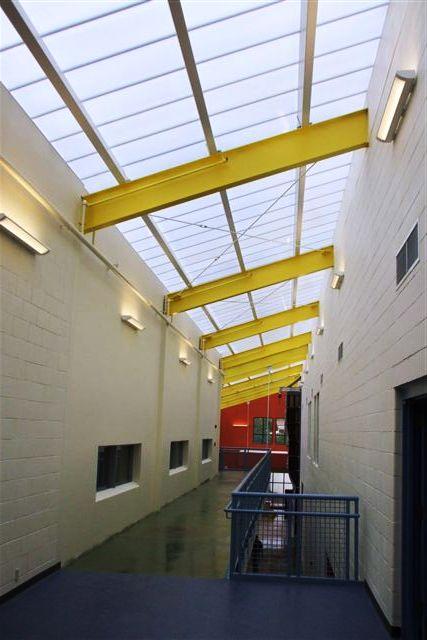
Both systems surpass AAMA standards for air infiltration, water resistance, and structural performance. Also, both ship as prefabricated assemblies, so components arrive pre-cut and ready to install. The NYCTA skylight case study documents how twenty-five SKYGARD 3700 units replaced failing skylights in a working transit maintenance facility. As a result, the installation reduced excess light and eliminated glare. Those are the same conditions that affect production quality on industrial shop floors.
Retrofitting Industrial Skylights onto Existing Structures
Many industrial facilities seeking to add daylighting are working with structures built before skylights were standard. Polycarbonate systems maximize natural daylight and reduce electric lighting requirements without requiring the structural upgrades that glass systems often demand.
However, for retrofit projects, the critical factors are weight, attachment method, and installation sequencing. For instance, polycarbonate panels are light enough to lift and position without heavy equipment in most retrofit conditions. Furthermore, EXTECH designs its systems to attach to existing structural framing without modifications to the supporting structure. That keeps the project scope contained and reduces trade coordination on site. For more on the full range of translucent wall and window systems for industrial buildings, see EXTECH’s applications overview.
To learn more about the advantages of industrial skylights and how you can secure one for your facility, connect with us today.
Also Read: ASC Inventory Management: How to Audit Your 3PL for Full Compliance