Geothermal Workforce Federal Grants Are Meant to Support
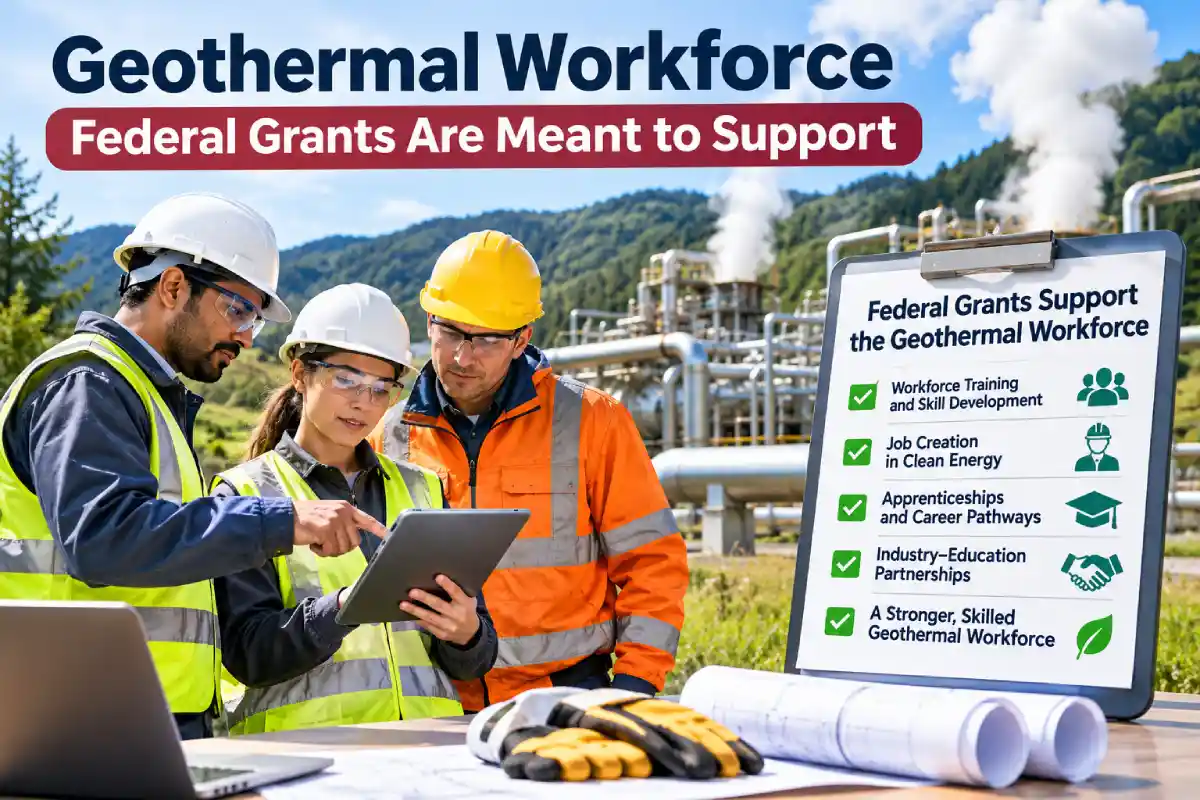
Geothermal Workforce Federal Grants Are Meant to Support – Federal workforce grants can help train the drillers, installers, and technicians that ground source heat pump (GSHP) projects demand. Knowing who these programs target helps you decide where your team fits and which opportunities deserve your attention. Geothermal workforce development funding now flows through prize competitions, state-run training grants, and regional partnerships.
The International Ground Source Heat Pump Association (IGSHPA) keeps members informed on federal developments that shape industry growth. You’ll learn which federal programs support the GSHP workforce and which roles they’re designed to help. You’ll also see how certified credentials position your team to take part in funded training and hiring efforts.
Table of Contents
What Geothermal Workforce Development Grants Support
Federal geothermal workforce grants support drillers, installers, service technicians, and trainers who build and maintain ground source systems. Current programs include a Department of Energy prize for regional partnerships and state-run contractor training grants. Together, these programs fund the training, certification, and hiring pathways that grow a qualified ground source workforce.
Which Federal Programs Fund Geothermal Workforce Development
The U.S. Department of Energy (DOE) runs a prize competition built specifically for the geothermal heat pump workforce. Called the Partnerships to Accelerate Training and Hiring for Geothermal Heat Pumps (GHP PATHs) Prize, it rewards regional partnerships. Each team focuses on geothermal heat exchange systems and shallow drilling, two areas where skilled workers remain scarce.
According to the DOE, eight teams advanced in September 2026 to the prize’s final phase. In that phase, teams will put their programs to work and report new hires and workers trained. The winning teams represent New England, Alaska, Colorado, the Midwest, and the Northwest, which shows how widely the need extends.
Meanwhile, the Training for Residential Energy Contractors (TREC) program gives states federal funds to train, test, and certify contractors. States such as Colorado, Maine, and Minnesota now run TREC programs focused on residential efficiency and electrification work.
However, TREC eligibility varies by state, so you should confirm whether your state’s program covers ground source training. IGSHPA’s federal outlook update also helps you follow policy changes that affect the GSHP industry. Tracking both programs gives you a clearer picture of where geothermal workforce development support is headed.
The Workers These Grants Are Meant to Support
Federal workforce programs aim to expand the pool of people who design, drill, install, and maintain ground source systems. Each program defines eligibility differently, yet several roles appear again and again across funded efforts. Here are the groups most likely to benefit when federal support reaches the ground source industry.
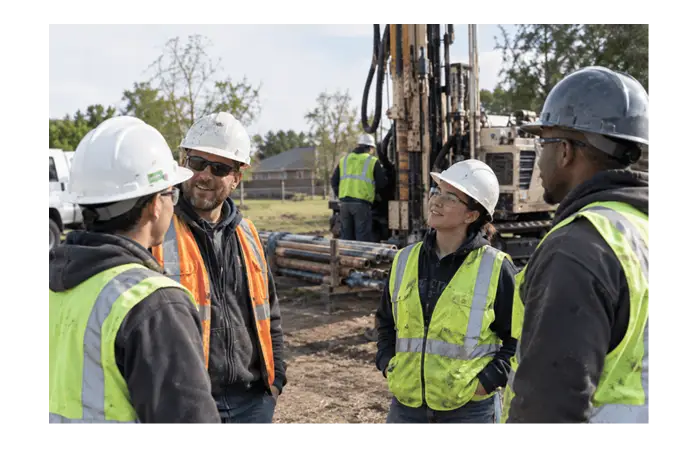
- Shallow drillers who bore and grout vertical loops receive special attention because the DOE prize targets drilling skills directly.
- Heating, ventilation, and air conditioning (HVAC) technicians can upskill into GSHP installation and service through funded training programs.
- New entrants, including students and career changers, gain structured pathways into the trade with support from employers.
- Trainers and training providers can expand their programs, add equipment, and reach more workers across their regions.
For employers, the GHP PATHs model also ties training to real jobs through hiring commitments from local companies. As a result, trainees move from the classroom into paid work instead of searching for opportunities on their own. Linking funding to hiring makes geothermal workforce development more durable for both workers and the companies that employ them.
Research supports this approach, since grants alone rarely close a skills gap without strong training infrastructure. According to Energy Research & Social Science, training grants should pair with national training centers backed by qualifications and accreditations.
Position Your Team for Geothermal Workforce Development Funding
Funded programs look for trainers and contractors who can prove their work meets recognized industry standards. IGSHPA’s job-specific training and certificates give your team credentials that incentive and workforce programs can verify. In fact, states and provinces are adopting IGSHPA training as a quality benchmark for their programs.

Partnerships matter too, because federal workforce programs often reward collaboration between employers, trainers, and community groups. For example, the Geothermal Market Capacity Coalition (GMCC) connects drillers, installers, educators, and trade groups working on the same goals.
You can also list your certified staff in the IGSHPA business directory so partners and program administrators can find you. Similarly, the IGSHPA Annual Conference on September 20 to 22, 2027, helps you meet potential partners in one place. Each connection you build strengthens your role in geothermal workforce development and your readiness for future funding rounds.
Policy priorities can shift from year to year, so staying informed keeps your team ready to act quickly. Consequently, companies with certified staff and strong partnerships can respond faster when new opportunities open. Your investment in credentials today keeps your company ready whenever a funded project needs qualified workers.
Prepare Your Workforce for What Comes Next
Federal grants aim to build a larger, better-trained workforce for every stage of a ground source project. Drillers, installers, technicians, and trainers all stand to gain when funding meets strong standards and partnerships. IGSHPA certification helps your company play a lasting part in geothermal workforce development, no matter how programs evolve.
Start by reviewing which IGSHPA credentials match the roles your team fills today. Next, check your state’s workforce and incentive programs to see where certified professionals can take part. Reach out to IGSHPA to learn how certification can prepare your team for funded training and hiring opportunities.