Ensuring Secure Network Access in the Era of Remote Work
The modern workplace has rapidly evolved, with remote and hybrid work models becoming the standard for many organizations. While these changes deliver improved flexibility and broaden access to talent, they also introduce new cybersecurity complexities. Protecting sensitive information and maintaining strong network defenses is now more critical than ever. As businesses seek effective ways to secure their distributed workforces, solutions like SASE Solutions have become pivotal for establishing secure network access and safeguarding corporate resources.
The distributed nature of remote work has contributed to a surge in cyber threats, primarily targeting vulnerabilities in unsecured home networks and endpoint devices. Organizations must rethink their legacy security strategies and embrace integrated frameworks that address modern risks. Developing robust remote access protocols and leveraging advanced security technologies are essential for reducing risk and ensuring operational continuity.
Cyber criminals are exploiting this shifting landscape by capitalizing on weaknesses in outdated systems. Security leaders now face an urgent need to build a cohesive security plan that accommodates both remote and in-office teams. By assessing their network architectures and educating users on best practices, companies can significantly reduce the risk of breaches and data exposure.
Tech giants and cybersecurity authorities, such as the Cybersecurity and Infrastructure Security Agency (CISA), recommend implementing proactive measures to counter these growing threats. Empowering employees with the knowledge and tools to recognize phishing attacks and suspicious activity is as important as technology upgrades in defending the organization.
Table of Contents
Evolving Threat Landscape
Transitioning to remote work has dramatically increased the attack surface for organizations. According to a survey published by Cybersecurity Insiders, a significant percentage of IT professionals (75%) feel that their companies have become more vulnerable to cyber threats since moving to remote or hybrid models. The most common methods of attack include phishing campaigns, ransomware infiltration, and credential stuffing, each of which often exploits weaknesses in home environments and the lack of enterprise-grade security on personal devices.
Home Wi-Fi networks are typically less secure than business networks, and employees’ usage of multiple devices, both personal and company-issued, amplifies exposure to risk. The proliferation of cloud services and third-party applications further complicates security for IT departments, as it becomes increasingly difficult to monitor and control access across a widely dispersed workforce.
Limitations of Traditional VPNs
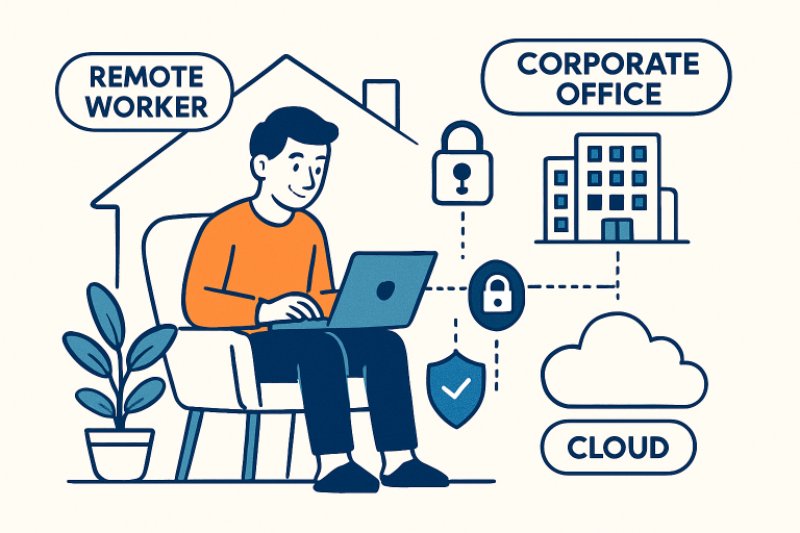
For many years, Virtual Private Networks (VPNs) have enabled secure remote connectivity, but their effectiveness is waning as workforces grow more distributed. Several key limitations have become apparent:
- Broad Network Access: VPNs often grant users wide-ranging access to the internal corporate network upon authentication, which can put sensitive data at risk if credentials are ever stolen.
- Performance Bottlenecks: Traditional VPN architecture usually channels all remote traffic through centralized data centers, causing congestion and significant slowdowns that hinder productivity.
- Security Vulnerabilities: VPNs are not immune to exploitation, with documented vulnerabilities sometimes remaining unpatched. Attackers can weaponize these vulnerabilities to breach organizations from afar. For instance, a report from TechCrunch highlighted how flaws in widely used corporate VPNs put company secrets at risk.
Adopting Zero Trust Network Access
Zero Trust Network Access (ZTNA) reframes the approach to security. Rather than assuming trust based on location or prior authentication, it continuously validates every user and device at every point of access. This model helps organizations:
- Enforce Granular Access Control: Users receive only the minimum permissions needed to carry out their responsibilities, minimizing the risk and impact of a potential breach.
- Require Continuous Verification: ZTNA systems regularly authenticate users and validate devices to ensure they meet strict security criteria.
- Prevent Lateral Movement: By segmenting network resources and eliminating implicit trust, ZTNA makes it much harder for attackers to move between systems undetected if they gain entry.
Adopting Zero Trust is not a one-size-fits-all effort, but organizations that prioritize this model see measurable improvements in risk mitigation and compliance with industry regulations.
Implementing SASE Solutions
Secure Access Service Edge (SASE) combines comprehensive networking capabilities with advanced cloud-native security services into a unified architecture. SASE solutions transform how organizations connect and protect their increasingly remote and mobile users by offering:
- Unified Security Framework: Bringing together multiple components, such as secure web gateways, firewall-as-a-service, cloud access security brokers, and zero trust capabilities, SASE simplifies security management and closes gaps between disparate systems.
- Scalability: SASE adapts to dynamic traffic patterns and shifting workforce demands without sacrificing security or user experience.
- Optimized Performance: By leveraging edge locations worldwide, SASE can route user traffic through the most efficient paths, reducing latency and boosting application performance for globally distributed employees.
These capabilities not only enhance security but also streamline IT operations, making SASE a strategic investment for future-ready organizations.
For a deeper dive on SASE and its transformative impact on modern security architectures.
Best Practices for Secure Remote Access
To maintain a strong security posture in remote work environments, organizations should observe several best practices:
- Implement Multi-Factor Authentication (MFA): MFA greatly reduces the likelihood of unauthorized access by requiring multiple forms of identification during user login.
- Regularly Update and Patch Systems: Timely patching of operating systems, applications, and network devices is essential for closing known security gaps exploited by cyber criminals.
- Educate Employees on Cybersecurity: Ongoing security awareness training empowers employees to recognize and resist phishing attempts, malware, and other common attacks.
- Monitor Network Activity: Using advanced monitoring tools and analytics allows IT teams to detect and respond to suspicious activity before it escalates.
In addition, implementing device management and endpoint protection solutions can ensure that all endpoints accessing corporate resources are compliant with security policies..
Conclusion
The rapid adoption of remote work has fundamentally changed the security landscape. Organizations can help protect their employees and valuable data by moving beyond traditional VPNs and embracing innovative models like Zero Trust and SASE. By implementing these solutions, proactively educating staff, and enforcing strict access controls, companies can create secure, flexible network environments that support their operational needs while staying resilient against evolving cyber threats.
Also Read: 5 Unique Team Building Activities