Gullwing Doors: Why They’re Rare in Modern Car Design
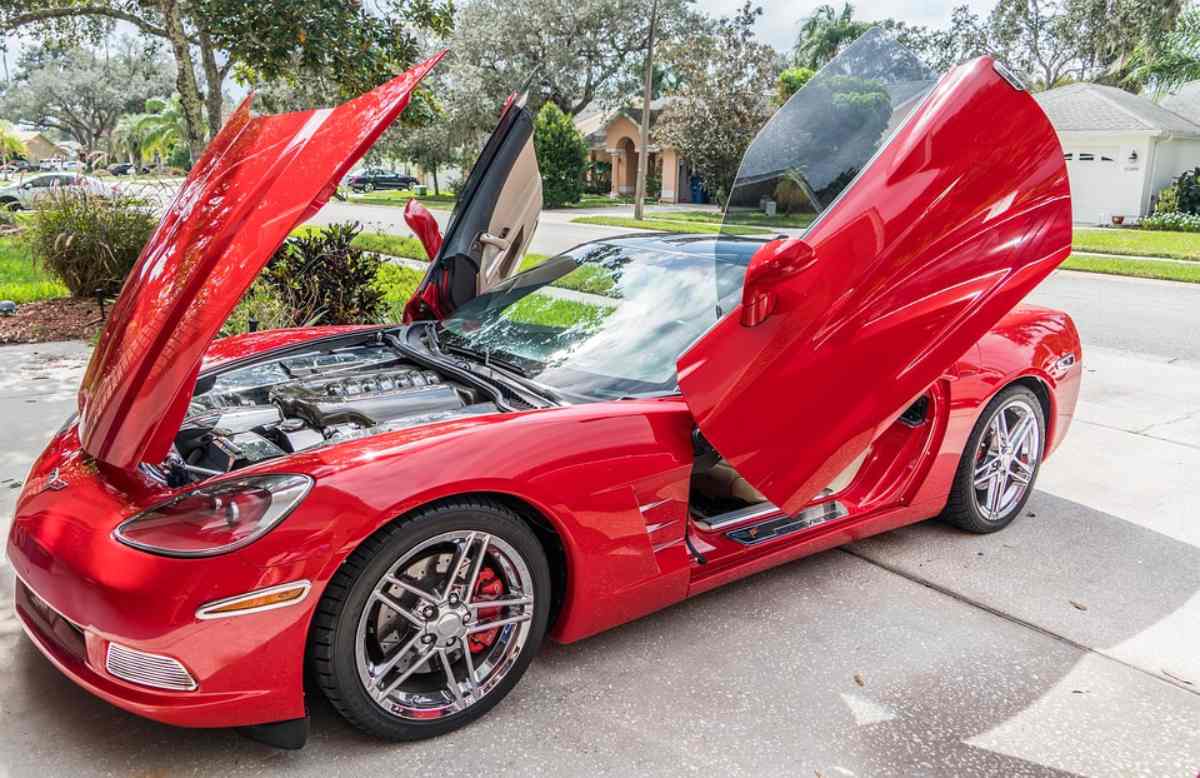
Gullwing doors—those striking, upward-opening doors made iconic by cars like the Mercedes-Benz 300SL and the DeLorean DMC-12—have always captured the imagination of automobile lovers. Their dramatic aesthetic and futuristic appeal make them a memorable design element in automotive history. Yet despite their visual appeal and the passionate following they attract, gullwing doors remain rare in modern automotive manufacturing. Very few carmakers incorporate them into mainstream vehicles, raising an important question: Why don’t more cars have gullwing doors?
To understand the answer, we must explore the engineering challenges, safety considerations, real-world limitations, and economic constraints that accompany this unique design. While gullwing doors look spectacular on display or in motion, practicality often determines whether a feature can survive in everyday vehicle production. Below is a deeper look at why the automotive industry continues to favor conventional door designs.
Gullwing doors (or falconwing doors, if you must) like the ones on the new Tesla Model X are undeniably cool. But they’re more than just some flashy design choice. Gullwing doors take way less clearance to open compared to traditional doors, making them great for tight urban spaces. They’ll let you load a kid into the car without hunching over. You can even drive with them open; did I mention they are COOL?
But if they’ve got these handy features, why don’t we see them on more cars?
Table of Contents
1. Engineering Complexity and Structural Reinforcement
Gullwing doors require a completely different approach to vehicle architecture. Traditional cars rely on a central B-pillar to maintain structural rigidity and safety in the event of side impacts. However, gullwing doors eliminate that pillar because they hinge at the roof rather than the sides.
To compensate for the missing support, manufacturers must add significant reinforcements to the roof, chassis, and side frames. This strengthens the vehicle but also increases its weight. A heavier frame affects fuel efficiency, performance, and even production costs. For many manufacturers, the added structural complexity does not justify the limited benefits of a unique door design.
In contrast, side-opening doors are far easier and more cost-effective to integrate into various vehicle styles, making them the widespread industry standard.
2. Safety Concerns and Real-World Risks
Although visually appealing, gullwing doors come with safety challenges. In traditional designs, passengers can easily exit the vehicle during emergencies. However, gullwing doors can create issues in specific scenarios:
a. Rollover Situations
If a car flips onto its roof, gullwing doors may be difficult—or impossible—to open. Manufacturers must engineer emergency release systems, but even then, access can be compromised by external pressure or damage.
b. Side-Impact Concerns
Removing the B-pillar means engineers must rely on other structural elements to protect passengers during collisions. While this is technically possible, it requires sophisticated (and expensive) design solutions.
c. Height-Related Challenges
The doors require vertical space to open. In low ceilings like underground parking garages or cramped residential garages, gullwing doors may hit the ceiling or fail to open fully.
These limitations make gullwing doors less practical for daily use, reducing their appeal to manufacturers targeting mainstream consumers.
3. Cost Considerations and Manufacturing Expense
From production to maintenance, gullwing doors are costly. The hinge mechanism is more complicated, requiring precise engineering, advanced hydraulics, or gas struts. Even after production, long-term maintenance is expensive due to the specialized components needed to ensure smooth and safe operation.
Manufacturers that aim for affordability cannot justify adding such an expensive feature when only a small segment of buyers prioritize aesthetics over cost. For most consumers, traditional doors offer everything they need without added complications or price increases.
4. Practicality Issues for Daily Use
Consumers today want convenience and practicality. Gullwing doors, while attractive, often fall short in real-world conditions:
a. Parking in Tight Spaces
Urban drivers frequently park in compact spaces where vertical clearance or space beside the vehicle is limited. While gullwing doors require less horizontal clearance compared to scissor doors, they still need ample overhead room.
b. Weather and Wind Sensitivity
Strong winds can make it difficult to open or close gullwing doors safely. Rain and snow can also fall directly into the cabin when the door is lifted upward.
c. Height Limitations for Garages
Many residential garages, especially older constructions, lack the ceiling clearance required for gullwing doors to open comfortably.
These everyday inconveniences are significant deterrents for mainstream adoption.
5. Niche Appeal Rather Than Mass Demand
Gullwing doors cater mostly to enthusiasts rather than everyday drivers. Their appeal lies in exclusivity and design flair—qualities that make them ideal for limited-edition or high-performance sports cars. Manufacturers that produce mass-market vehicles must prioritize functionality and durability over unique aesthetics.
Because the demand for gullwing doors is relatively small, investing in the specialized engineering required for such vehicles rarely makes financial sense, especially when conventional designs meet the needs of the majority.
6. Historical Legacy and Cultural Significance
Gullwing doors have a strong cultural identity thanks to their limited but memorable appearances in automotive history. Cars like the DeLorean DMC-12 boosted their popularity, particularly among movie fans after Back to the Future. However, their iconic status has also solidified them as a rarity—a design considered special precisely because it is not common.
If gullwing doors became mainstream, they would likely lose part of their mystique. Manufacturers often reserve unique features for flagship or concept models to maintain brand exclusivity.
7. Modern Alternatives and Evolving Technologies
Today, automakers explore innovative door designs that provide style without sacrificing practicality. Butterfly doors, scissor doors, sliding doors, and even rotating doors offer futuristic functionality while remaining more adaptable to traditional car structures.
Additionally, with the rise of electric vehicles, battery placement often demands a more rigid side structure—making roof-hinged doors even more challenging to integrate.
They’re tough to design well
It may not seem like a huge engineering challenge to make a door open up instead of out once you have the idea, but there are a few persistent design challenges that plague gullwing doors in particular.
The first is that the weight of the door, which is generally pretty heavy, has to actively fight gravity on its way open instead of just pivoting on a traditional hinge. Fortunately you don’t have to just force passengers to just lift the whole weight of the door themselves. One solution (which the DeLorean uses) is to use a torsion bar to help, a rod that’s twisted to create tension when the door is closed, and that untwists and helps to lift the door once it’s opened. And like the Tesla X, you can also just power the doors.
But that’s not all. Green Car Reports—which dug up a handful of of-the-record sources to talk about the Tesla X in particular—surfaced a number of other challenges earlier this year. You have to make sure the roof isn’t going to warp at all. You have to find room for the torsion bars and power assist in the small part of the roof that is not part of the door. Have to make sure they are properly sealed. Gullwing doors have a tendency to be a bit leaky in the rain. Elon Musk himself mentioned it in an earnings call, as Green Car Reports points out, assuring that the company “has learned a lot about door seals.”
These aren’t insurmountable engineering challenges, but they are challenges you can get around by just using traditional doors instead.
They can be annoying to use
This GIF—from an episode of Vehicle Virgins about the Mercedes SLS AMG—pretty much speaks for itself.
Of course, like other gullwing door design problems, it’s not impossible to solve. If the doors are powered (like the Tesla X) it’s no real issue, but that’s both an extra expense and an extra point of failure. If they’re not, shorties and kids are just out of luck.
It’s hard to make them safe
Safety is probably the biggest barrier to the spread of gullwing doors. Federal safety standards mandate that doors be designed in a way that it’s feasible to open them after a rollover crash, and getting gullwing doors to comply can be a little rough.
Solutions range from the crude to the expensive. DeLorean windows, for instance, are designed to be kicked out in case of emergency. Meanwhile the doors on the Mercedes SLS AMG are designed with explosive bolts that will fire the door off its hinges if the car is upside down. But no solution is quite as elegant as “don’t have gullwing doors.” Or at least falling somewhere in the middle like the Tesla X, which has traditional doors up front and gullwings in the back.
collisions
On top of that, there’s the challenge of protecting against side collisions; making the doors strong enough to stand up to a direct T-boning as well as a normal door is possible, but gullwing doors also need to be light to be easier to lift. It’s a direct conflict that’s easily avoided by a solution that, at this point, I think you can probably guess.
And ultimately, that’s why gullwing doors and their like aren’t more widespread: It’s just so much easier not to have them. While they do offer a few benefits—and a whole boatload of cool—they cause more trouble (and cost more money) than they’re ultimately worth. Most of us don’t even know what we’re missing anyway. And in the end they don’t make it to very many cars, and the ones they wind up on tend towards the expensive.
So the next time you see some guy in a parking lot, conspicuously tying his shoe underneath an open gullwing door for minutes on end, let him savor his moment. He paid for it.