Marketing Plans: Planning, Creatingan the Difference
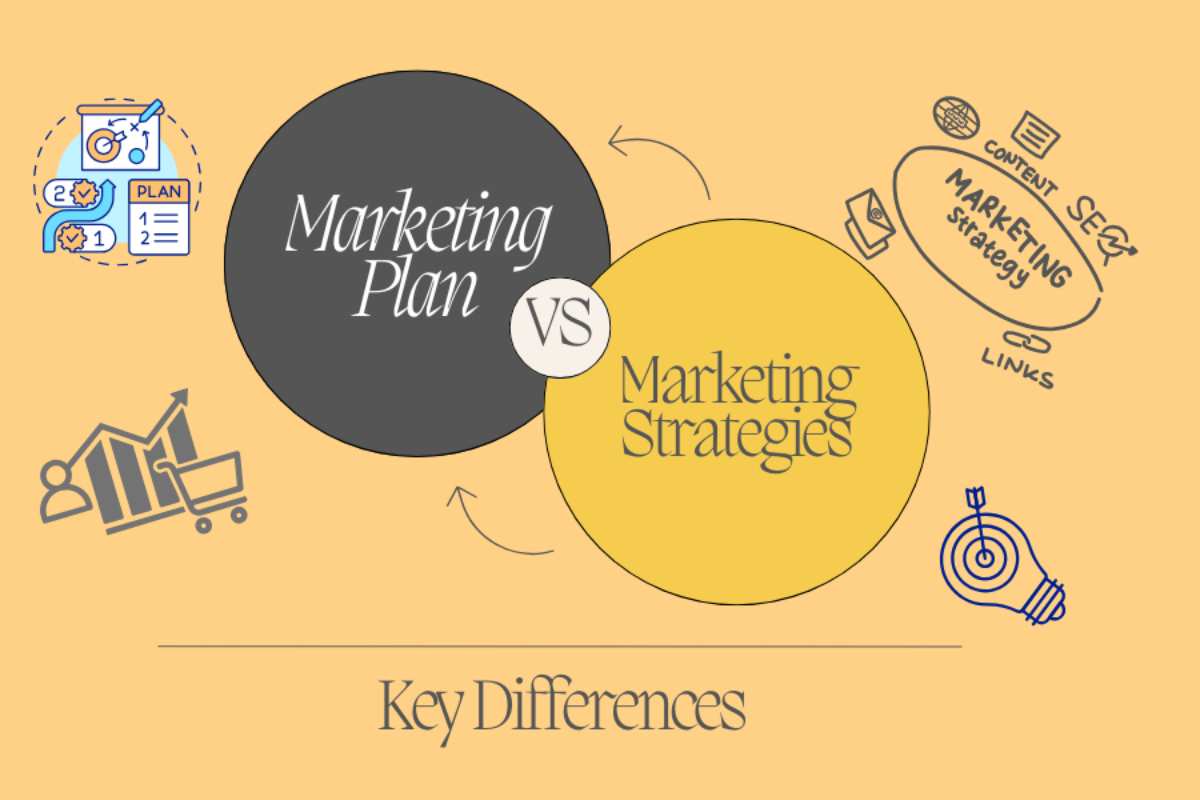
The Difference Marketing Plans
Marketing expenses are often the highest after employee salaries for many businesses. As a small business owner or marketer, you want to ensure your budget is being used in the most effective way possible—and that every rupee (or dollar) spent moves you closer to your growth goals.
But what usually happens is that many companies jump into random tactics—posting on social media, creating ads, sending emails—without a clear, data-driven plan. The result? Wasted time, wasted money, and inconsistent results. Some even get lucky with a big win, but because there’s no strategy behind it, they struggle to repeat that success.
This is where a marketing plan becomes essential. In this guide, you’ll learn how to strategically grow your business and maximize your ROI using a well-defined marketing plan.
Table of Contents
What is a Marketing Plan?
A marketing action plan template is a report that describes your marketing strategy for the coming year, quarter, or month. Typically, a marketing plans contains:
- Summary of your marketing goals.
- Description and analysis of the current situation of your company.
- Timeline of the achievement of the strategies defined in your plan.
- Metrics to monitor: KPI (key performance indicators).
- Description of your target and their needs.
Learning how to develop a marketing plan requires you to think about the results are important steps in creating an effective marketing strategy. A plan will also help you stay focused on your big goals.
With the vast library of marketing plan templates, creating a marketing plans won’t be tedious or complicated.
While you are a team trying to set smart marketing goals, a consultant trying to send the customer in the right direction, an individual trying to achieve a goal, a concrete marketing plan shows you that your strategies are based on research. and reliable data.
How to create a Marketing Plan? :
The scope of your marketing plan may vary depending on the purpose or type of organization to which you belong. For example, you can create a marketing plans that offers a complete view of a company’s marketing strategy, or you can simply focus on a specific channel such as SEO, social media marketing, influencer marketing, or marketing.
The structure of your marketing plan may vary depending on your business size, goals, and industry. For example, you may create:
-
A complete marketing plan covering all channels
-
A channel-specific plan for SEO, social media, email marketing, influencer partnerships, etc.
Regardless of the purpose, most marketing plans follow the same foundational steps:
1. Define Your Goals Clearly
SMART goals offer clarity, focus, and direction.
2. Understand Your Target Audience
Identify demographics, buying behavior, pain points, and motivations.
3. Conduct a SWOT Analysis
Strengths, weaknesses, opportunities, and threats help shape your approach.
4. Analyze the Market and Competitors
Identify trends, gaps, and winning strategies in your niche.
5. Choose Your Marketing Channels
Select platforms where your audience actually spends time.
6. Create an Actionable Timeline
Break your strategy down into monthly, weekly, and daily actions.
7. Set KPIs for Each Strategy
Measure performance precisely—traffic, conversions, cost per lead, etc.
8. Allocate Budget Wisely
Assign budgets to each channel based on expected ROI.
9. Adjust and Optimize Continuously
Treat your plan as a living document that evolves with results.
What’s the Difference Between a Marketing Plan and a Business Plan?
A marketing strategy may be included in a larger business plan. A well-written marketing plan is built on a sound marketing strategy. While a marketing strategy provides a list of actions, it is useless to a company unless it is built on a solid strategic foundation. It must adhere to a set of certain tasks and marketing techniques.
Why do you need a Marketing Plan?
There are numerous reasons why every brand and marketing team requires an effective marketing strategy.
The following are the top 3 reasons:
Create better goals
When you have particular objectives to meet, you can devise a strategy to attain them. It’s not the same to have broad goals like “expanding my business” versus specific KPIs like “I want to increase my sales by $600,000, and to do so, I need 1,000 new clients.”
Actual KPIs can assist you in determining how to get there. Set some SMART goals, which stand for clear, measurable, achievable, relevant, and time-framed objectives.
Improve your focus
Marketing that isn’t focused might be clumsy and unsuccessful. The best advice we can give you is to concentrate on a few key chores and complete them well. A digital marketing strategy will assist you in focusing on the tasks that will have the most influence on your success.
Things will, of course, change, and your plan will change as well. However, if you use a strong marketing strategy outline, you’ll have your next month’s tasks written out, making your work that much more effective.
Additional Components of a Strong Marketing Plan
To make your marketing plan truly impactful, consider adding these elements:
1. Customer Journey Mapping
Understand how prospects move from awareness → consideration → purchase → loyalty.
Map content and strategies for each stage.
2. Budget Breakdown and Forecasting
Allocate funds to channels such as:
-
SEO
-
Social media ads
-
PPC
-
Content creation
-
Influencers
-
Email automation
A budget forecast helps prevent overspending and improves ROI.
3. Content Strategy and Calendar
Define:
-
What type of content you will produce
-
Posting frequency
-
Platform-specific variations
This ensures your messaging stays consistent and aligned with brand goals.
4. Competitor Benchmarking
Analyze competitors’ strengths, weaknesses, and strategies.
Use their gaps as your opportunities.
5. Optimization and Reporting System
A marketing plan must include:
-
Monthly performance reports
-
Quarterly strategy reviews
-
Ongoing experimentation
Optimization turns good strategies into great ones.
Stay consistent
It takes time to achieve success. Consistency is important in marketing, and all of the social media platforms’ algorithms reward it. You’ll experience incredible results if you’re consistent with your marketing efforts. This entails making one article each day or conducting a PPC campaign that gains traction over time. A smart marketing strategy can help you maintain momentum and consistency.
A marketing plan’s goal is to make sure that marketing operations are relevant and timely in order to meet an organization’s goals. It’s a strategy for identifying a long-term competitive position and the resources required to attain it.
Let’s speak about the numerous components that make up a marketing now that you know what it is and what it’s utilised for.